Tree Trimming & Pruning in Palm Harbor & Pinellas County
Healthier trees, safer property, and a cleaner look, with proper cuts that protect the tree, not shortcuts that harm it.
Well-timed trimming is one of the best things you can do for a tree, and for everything growing or standing near it. For more than 20 years, Brian Walker and his crew have shaped, thinned, and pruned trees of every kind across Pinellas County, keeping them healthy, safe, and looking their best, never with shortcuts that harm the tree.
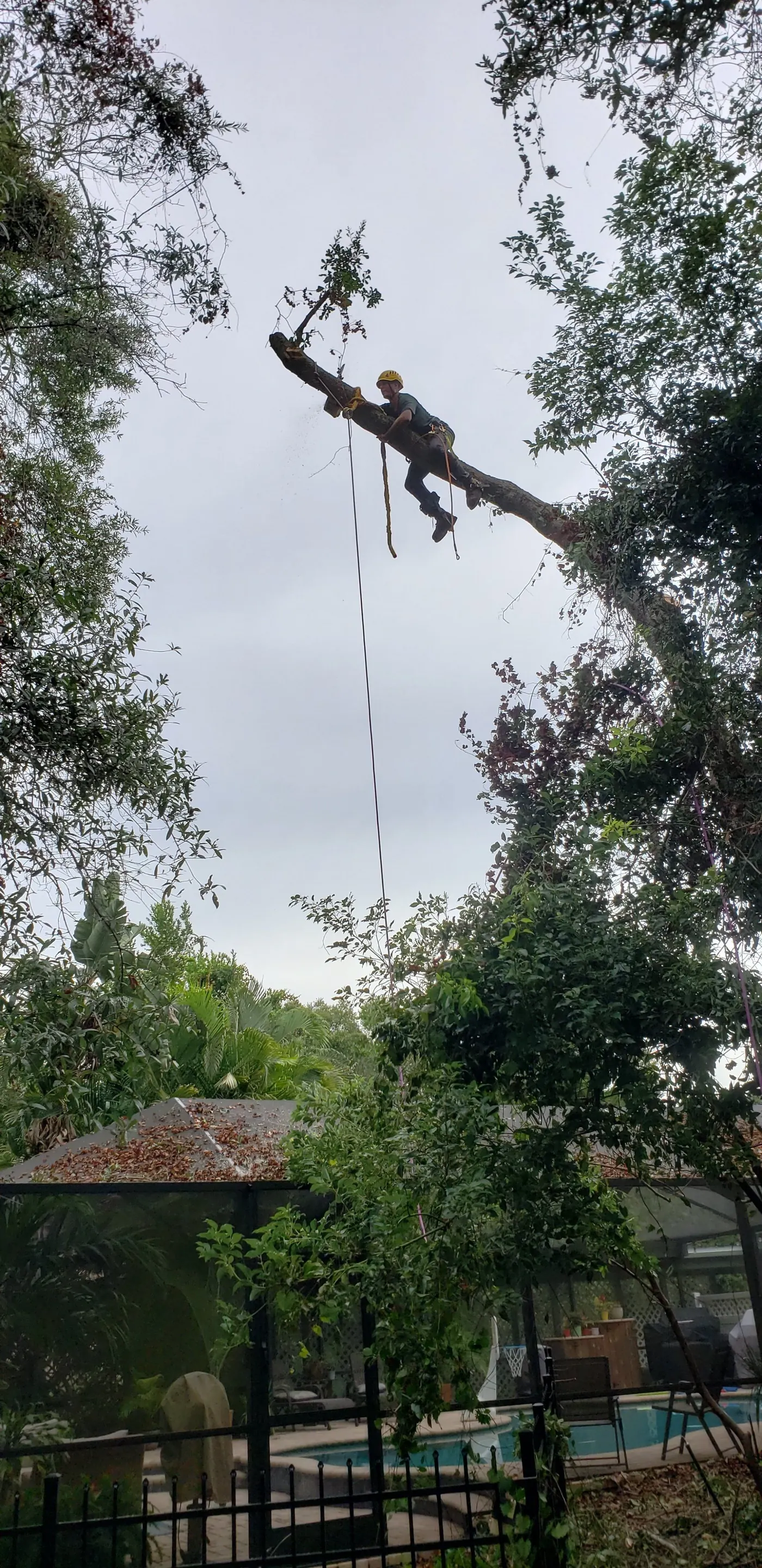
Why Regular Trimming Pays Off
Trimming isn't just about looks, though a well-shaped tree does make a property. On the right schedule, it keeps a tree healthier, your family and home safer, and your yard ready for the storms every Pinellas County summer brings.
Healthier growth
Removing dead, diseased, and crossing limbs lets a tree put its energy into strong wood. Better light and airflow through the canopy also cut down on the fungus and pests that thrive in Florida's humidity.
Safety from failure
Weak, dead, or overextended limbs are the ones that come down, in a storm or on a still afternoon. Taking them off before they fail protects your family, your cars, and your roof.
Clearance & protection
Branches rubbing the roof, blocking the drive, or reaching toward power lines cause real damage over time. Trimming keeps a safe gap between the tree and everything you'd rather it not touch.
Storm-season ready
A properly thinned canopy lets wind pass through instead of catching it like a sail. Ahead of hurricane season, that can be the difference between losing a few leaves and losing the whole tree.
Proper Pruning, Never Topping
There's a right way and a wrong way to cut a tree, and the difference shows up for years. The wrong way is topping, hacking the crown back to stubs to make a tree shorter fast. It's still common, and it's genuinely bad for the tree: topping starves it of the leaves it depends on, invites decay into every open stub, and triggers a rush of weak "water sprouts" that are far more likely to fail later than the limbs removed.
We make each cut just outside the branch collar, the slightly swollen area where a limb meets the trunk, so the tree can seal the wound naturally and defend itself against decay.
As a rule we don't remove more than about a quarter of a tree's live canopy in a season. Take too much and you stress the tree into exactly the weak, frantic growth you were trying to prevent.
Good pruning works with a tree's natural form and encourages strong branch structure, so it grows more stable over time, not more hazardous.
This is where experience earns its keep. Two decades of climbing and cutting Florida trees means we know how each species responds to the saw, and we cut accordingly.
Our Tree Trimming Process
Good trimming is planned, not improvised. Here's how we shape a tree so it comes out healthier, safer, and looking natural, never butchered.
We walk the property, look at each tree's health, structure, and clearances, and give you a written estimate with clear options, no pressure to do more than you need.
Every species and situation is different. We decide what to remove and what to leave, deadwood, crossing limbs, roof and line clearance, canopy thinning, before anyone leaves the ground.
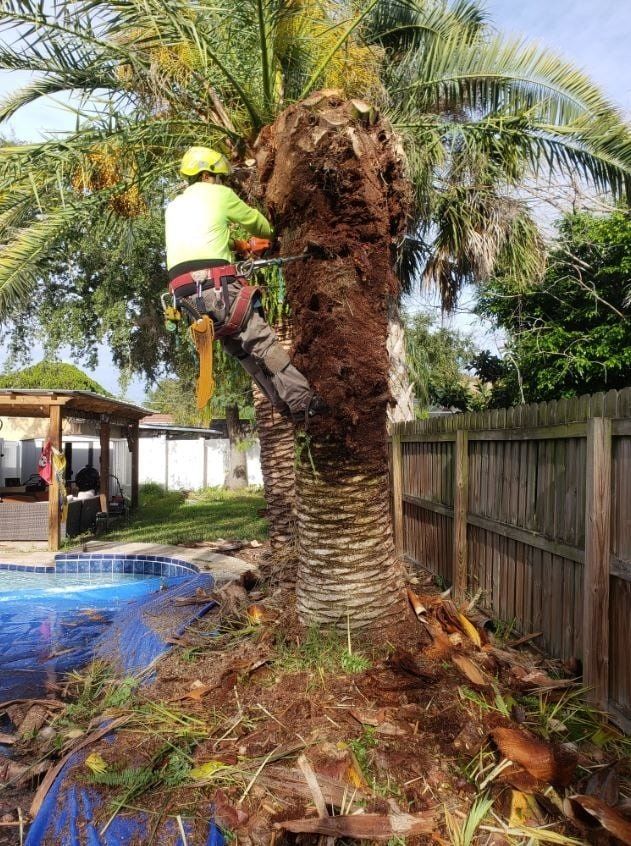
Using climbing lines, rigging, and the right gear, we make clean cuts at the branch collar and lower larger limbs under control instead of letting them drop onto what's below.
We step back and shape as we go, keeping the tree balanced and true to its natural form, healthy and good-looking, never topped into stubs.
We haul off every branch, then rake and blow the area. We leave your yard cleaner than we found it, that part isn't optional for us.
An Owner-Run Crew That Does It Right
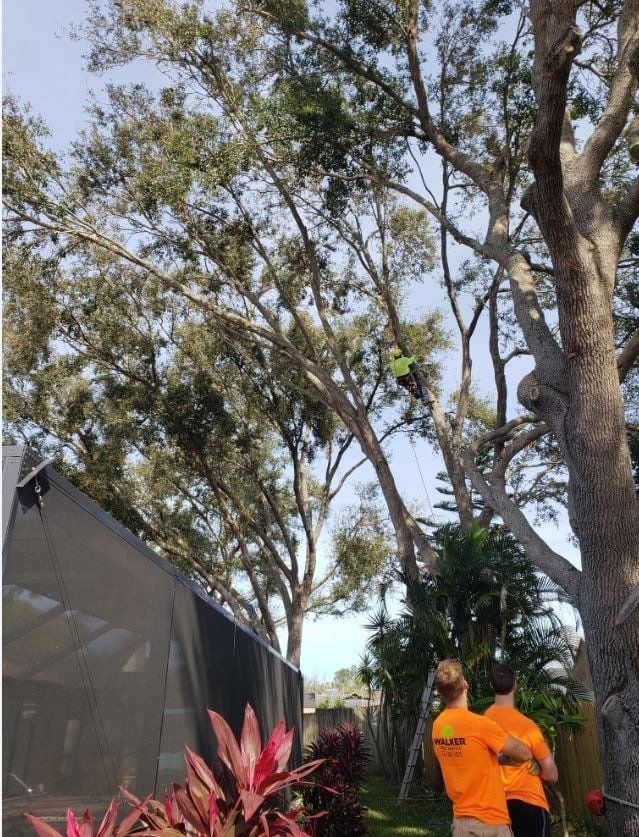
Walker Tree Service is owned and run by Brian Walker, who has spent over two decades climbing, cutting, and caring for trees across Pinellas County. When you call, you're dealing with the people actually doing the work, not a call center. We trim trees the way we'd trim our own: correctly, and only as much as the tree needs.
Many cheaper outfits skip workman's comp, which puts your property and liability at risk if someone is hurt in your yard. We don't.
The highest rating of any tree service in the area, earned one clean, on-time job at a time.
Free, written, and no pressure. We'll tell you when a tree is better left alone this year than trimmed just to trim.
Tree Trimming Across Pinellas County
We trim the trees Floridians live with every day, live oaks and laurel oaks, sand and slash pines, crepe myrtles, magnolias, and of course palms. Each has its own habits, and 20 years in this area means we know them: how a laurel oak carries its weight, when a crepe myrtle should (and shouldn't) be cut, why a palm should never be stripped into a "hurricane cut." We work in yards from Palm Harbor and Dunedin to Clearwater, Tarpon Springs, and Largo, for homeowners and commercial properties alike.
When to trim your Florida trees
For most trees, a three-to-five-year cycle keeps them healthy and in shape, though fast-growing species and any tree close to the house or power lines usually need a look more often. The best window for major trimming is late winter into early spring, ahead of the summer growth flush and hurricane season, when a thinned canopy sheds wind instead of catching it. Oaks do best pruned in the cooler, drier months to limit disease, while palms only need their genuinely dead or dying fronds removed. Dead or dangerous limbs, of course, should come off the moment you notice them.
What affects the cost of trimming
Every property is different, so we quote each job individually. The main factors are:
How tall the tree is, how much needs to come off, and how many trees you're having done at once.
How close the tree is to the house, fences, or power lines, and whether we're climbing or can reach it from the ground.
Hauling debris, clearing a specific structure, or combining trimming with a tree removal or stump grinding.
If a tree turns out to be too far gone to save, we'll say so honestly and talk through removal instead of trimming you can't benefit from. The only way to know your real price is a look in person, and that look is always free.
Helpful Reading on Tree Trimming
The Importance of Tree Trimming in Pinellas County
Why regular trimming protects both your trees and your property.
Read the guide →Trimming Trees Off Your Roof
How overhanging limbs damage a home, and when to cut them back.
Read the guide →Is Your Florida Tree Dead or Just Dormant?
How to tell whether a bare tree needs help or simply needs time.
Read the guide →Tree Trimming FAQs
How often should trees be trimmed in Florida?
It depends on the tree. Most established shade trees do well on a three-to-five-year cycle, but fast-growing species and any tree close to your house, driveway, or power lines usually need attention more often, sometimes every year or two. Our growing season is long here and our storms are serious, so we'd rather look at your specific trees and tell you honestly what each one needs than hand you a one-size-fits-all schedule. There's more in our post on the importance of tree trimming in Pinellas County.
What's the difference between tree trimming and pruning?
People use the two words interchangeably, and we're happy to do the same. If there's a distinction, trimming usually describes shaping a tree and clearing limbs for space and appearance, while pruning describes the more selective, health-focused removal of dead, diseased, or crossing branches. In practice a good visit is really both at once. What matters far more than the label is that every cut is made correctly at the branch collar, not topped or hacked back at random.
When is the best time of year to trim trees in Florida?
For most trees, the ideal window is late winter into early spring, before the summer growth flush and ahead of hurricane season, so a thinned canopy sheds wind instead of catching it. Dead or hazardous limbs are the exception and should come off any time of year. Species differ too: oaks are best pruned in the cooler, drier months to limit disease, and palms should only have their truly dead or dying fronds removed, never be over-cut into a hurricane cut. Not sure whether a bare tree needs work or is just resting? See dead or simply dormant.
Do you trim branches away from the roof and power lines?
Yes, clearing limbs off your roof, gutters, and siding is one of the most common jobs we do, and one of the best ways to protect a home from rubbing damage, trapped moisture, and rodents using branches as a bridge. We also cut back limbs reaching toward the house and the service line running from the pole to your home. The high-voltage lines along the street are the utility's responsibility, and we'll tell you honestly when a limb is their call. More on this in our guide to trimming trees off your roof.