Palm Tree Trimming in Palm Harbor & Pinellas County
Clean, correct palm pruning, dead fronds, seed pods, and flower stalks removed by hand, never over-cut.
When palm fronds turn brown, seed pods start dropping, or your palms are simply getting too tall to handle safely, it's time for a proper trim. For more than 20 years, Walker Tree Service has kept palms healthy and tidy across Pinellas County, pruned the right way, without the harmful "hurricane cuts" that quietly weaken them.
How a Palm Should, and Shouldn't, Be Cut
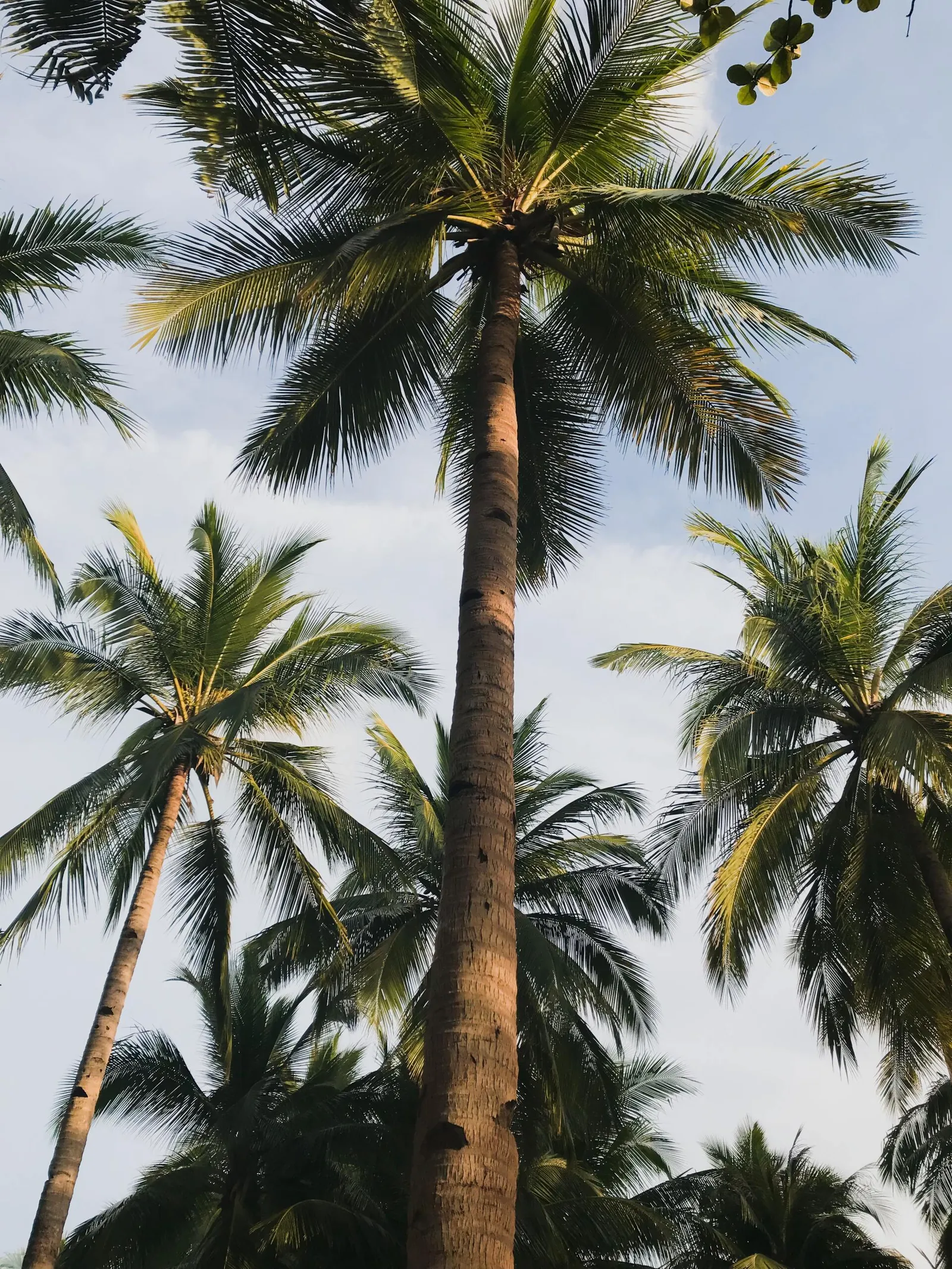
A palm is not an oak. It grows from a single bud at the very top, it can't heal a wound or regrow a branch, and it feeds itself through its green fronds. That biology changes everything about how a palm should be trimmed. Here's what proper palm pruning actually means.
Only the dead fronds
Good pruning takes off the brown, dead, and dying fronds hanging below horizontal, and nothing more. Healthy green fronds are the palm's food and its stored nutrients. Cutting them starves the tree.
Seed pods & flower stalks
We remove the flower stalks and the heavy seed pods that follow. They sap the palm's energy and drop a sticky, sprouting, pest-attracting mess across your yard, pavers, and pool deck.
Never a "hurricane cut"
Stripping a palm to a bare pom-pom does not make it storm-safe, that's a myth. Over-pruning starves and stresses the palm and leaves it more vulnerable in a storm, not less.
One growing point, no shaping
You can't "shape" a palm the way you'd shape a hardwood. It grows straight up from one bud, so the only real job is carefully removing what's dead or draining it, without ever wounding the trunk.
Our Palm Trimming Process
A good palm trim is a restrained one. Here's exactly how we keep your palms healthy and tidy, without over-cutting them.
We identify your palm species, check the fronds, seed pods, and overall health, and give you a written estimate with clear options.
We prune when it actually helps, when fronds have browned or pods have formed, and plan safe access for tall palms with a climber or bucket truck.
We remove only dead fronds, pods, and flower stalks with clean, sanitized tools, and we avoid climbing spikes on a palm we're keeping whenever we can, so we don't wound the trunk or spread disease.
Green fronds stay. We won't hurricane-cut or scalp your palms even if asked, because it would harm them, restraint is the expertise.
We gather and haul off every frond, pod, and piece of debris. We leave your yard cleaner than we found it, that part isn't optional for us.
An Owner-Run Crew That Knows Palms
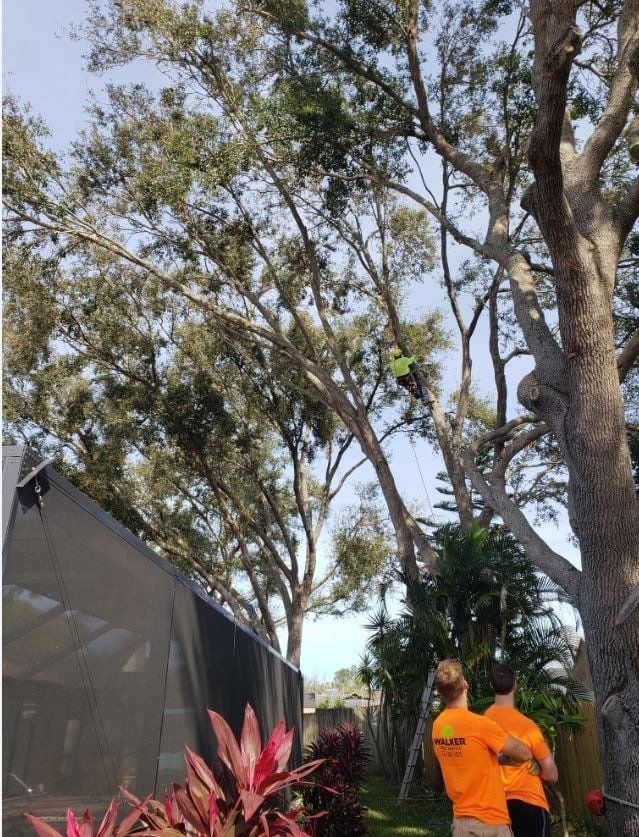
Walker Tree Service is owned and run by Brian Walker, who has spent over two decades trimming, climbing, and caring for trees and palms across Pinellas County. When you call, you're dealing with the people actually doing the work, not a call center. And because we understand palms, we prune them to stay healthy for the long run, not just to look "cleaned up" for a week.
Many cheaper outfits skip workman's comp, which puts your property and liability at risk if someone is hurt working up a tall palm. We don't.
The highest rating of any tree service in the area, earned one clean, on-time job at a time.
No hurricane cuts, no scalping. We'll tell you honestly when your palms barely need a thing instead of selling you an aggressive trim.
Palm Trimming Across Pinellas County
Pinellas yards are full of palms, and each species is trimmed a little differently. We work on the native sabal (cabbage) palm, Florida's state tree, plus queen palms, tall Washingtonia (Mexican fan) palms, pygmy date palms, Canary Island date palms, and more. Queen palms are prolific fruiters that drop heavy, messy seed pods; Washingtonias climb 40 feet and taller and hold a shaggy skirt of old fronds; and pygmy and Canary date palms carry needle-sharp spines while even sabal fronds have saw-toothed edges, which is exactly what makes a DIY palm trim genuinely dangerous. Twenty years here means we've handled them all, in yards from Palm Harbor and Dunedin to Clearwater, Tarpon Springs, Largo, and across the county.
Most palms only need trimming once or twice a year, when fronds have fully browned, or when flower stalks and seed pods appear. We don't trim on a rigid calendar or "just because." Over-trimming a palm does far more harm than leaving it a little shaggy, so we time each visit to what your palms actually need. Want the full picture first? Read our overview of palm tree services in Pinellas County.
What affects the cost of palm trimming
Every property is different, so we quote each job individually. The main factors are:
A cluster of short pygmy dates trims quickly; a 40-foot Washingtonia needs a climber or bucket truck.
Heavy fruiters and palms with years of dead fronds or a thick frond skirt simply take more work.
How reachable the palms are, plus haul-away of all the fronds, pods, and debris.
The only way to know your real price is a look in person, and that look is always free.
Helpful Reading on Palm Care
How to Prune Florida Palm Trees
The right way to cut a palm, dead fronds only, and why green fronds should stay.
Read the guide →When & How to Trim Palms in Pinellas County
The timing that fits our local palms, and the signs it's time for a trim.
Read the guide →Why Palm Trimming Matters for Pinellas Homeowners
What proper trimming does for your palms, your yard, and your property.
Read the guide →Palm Tree Trimming FAQs
How often should palm trees be trimmed?
Most palms only need trimming once or twice a year. The right time is when fronds have fully turned brown and died, or when flower stalks and seed pods appear. Heavy fruiters like queen palms may want a second pass. We don't trim on a rigid calendar or just because, over-trimming does more harm than leaving a palm a little shaggy, so we time each visit to what your palms actually need.
Is a "hurricane cut" bad for palm trees?
Yes. A hurricane cut, stripping a palm down to a few top fronds in a pom-pom shape, is one of the most damaging things you can do to it. It removes the green fronds the palm relies on for food and stored nutrients, stresses the tree, invites pests and disease, and over time narrows the trunk so the palm is actually weaker in a storm, not stronger. It does not make a palm safer. We never hurricane-cut, even when asked. Proper pruning removes only dead fronds, seed pods, and flower stalks.
Do you remove seed pods and flower stalks?
Yes, and we recommend it. Flower stalks and the heavy seed pods that follow drain energy from the palm and create a real mess, dropping fruit, staining pavers and driveways, sprouting seedlings, and attracting rats and other pests. Removing them while they're still forming keeps your palm cleaner and lets it put its energy into healthy fronds instead.
How much does palm tree trimming cost?
It depends on the number of palms, their species and height, how much dead material has built up, and how easy they are to reach. A cluster of short pygmy date palms is a very different job from a 40-foot Washingtonia that needs a climber or bucket truck. We provide a free, written estimate up front so you know the exact price before any work begins, no surprises.