Small Tree Removals vs. Large Tree Removals: When Can You DIY and When Should You Call Pros?
Picture this: you're enjoying a beautiful Saturday in your backyard, and you spot that pesky, slightly overgrown tree. It's not huge, maybe just twenty feet tall, a bit spindly, and leaning a little too close to your fence. "I can handle that," you think. You grab your chainsaw, maybe a trusty axe, and head out, envisioning a quick, satisfying DIY project. What many homeowners don't realize is that even a "small" tree holds an incredible amount of weight, tension, and unpredictable energy. A tree that looks manageable can quickly become a dangerous projectile, causing thousands of dollars in property damage, severe injuries, or worse, in a matter of seconds. Underestimating the physics of falling timber is a common, and often costly, mistake. At Walker Tree Service, we've seen it all, and we're here to help you understand why calling the pros, even for seemingly small jobs, is often the smartest and safest choice.
The DIY Trap: Why Even a Small Tree Removal Can Go Wrong
It's completely natural to want to save money and tackle home projects yourself. For many tasks, DIY is a great option. However, tree removal, regardless of the tree's apparent size, is a different beast entirely. The perceived simplicity of cutting down a "small" tree often masks a complex and potentially hazardous undertaking. Homeowners frequently fall into the DIY trap, believing that if a tree isn't towering over their house, it can't possibly pose a significant threat. This assumption can lead to serious consequences.
The Unpredictable Nature of Falling Trees
Unlike cutting a piece of firewood, a standing tree has a mind of its own, dictated by gravity, tension, and its unique structure. When you cut into a tree, you're releasing stored energy. A tree might look like it will fall in one direction, but a hidden lean, an unseen crack, or even a gust of wind can send it veering off course. Imagine a twenty-foot tree weighing hundreds of pounds, falling uncontrollably towards your garage, your neighbor's fence, or worse, a power line. The damage isn't just to property; injuries from falling branches, kickback from chainsaws, or a trunk rolling unexpectedly are all too common for untrained individuals.
Lack of Proper Equipment and Safety Gear
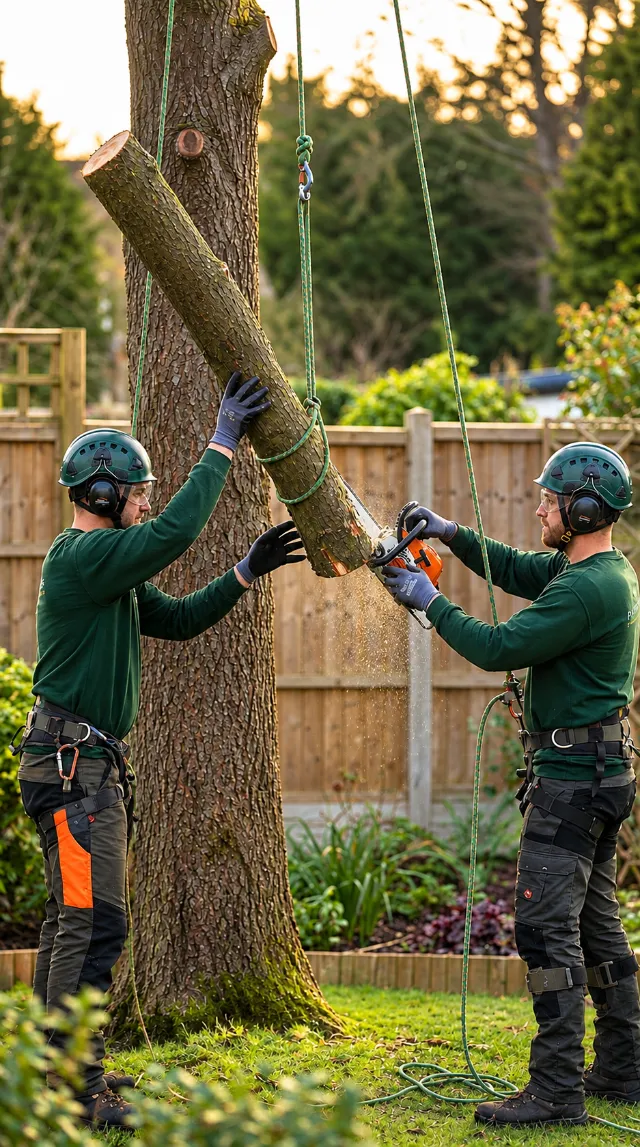
Professional tree removal isn't just about having a powerful chainsaw. It requires a suite of specialized tools, including ropes, pulleys, wedges, felling levers, and often, heavy machinery. More importantly, it demands professional-grade safety equipment. Most homeowners simply don't have access to or expertise with this equipment. Attempting to fell a tree with inadequate gear is like trying to put out a fire with a squirt gun - it's ineffective and incredibly dangerous.
The Hidden Dangers: Rot, Disease, and Structural Weakness
What looks like a solid, healthy tree on the outside can be a hollowed-out shell within. Rot, pest infestations, or disease can compromise a tree's structural integrity, making its fall path even more unpredictable. A professional can assess these hidden dangers before making a single cut, adjusting their strategy to account for weakened wood or unstable sections. A homeowner, without this expert eye, might unknowingly cut into a tree that's ready to splinter and snap in an unexpected direction, leading to a "barber chair" effect where the trunk splits violently upwards, posing a severe risk.
The Aftermath: Cleanup and Disposal
Let's say you successfully get the tree down without incident. What now? You're left with a massive pile of branches, leaves, and a heavy trunk. Hauling and disposing of tree debris is a significant task in itself, often requiring multiple trips to a landfill or renting a chipper. This adds unexpected time, effort, and cost to your "free" DIY project. At Walker Tree Service, we handle the entire process from start to finish, leaving your property clean and clear.
Evaluating Tree Removal Risk: Size, Lean, Proximity, and Physics
When considering tree removal, whether it's a small shrub or a towering oak, it's crucial to understand that "size" is only one factor in a complex equation. Professionals evaluate numerous variables to determine the safest and most efficient removal strategy. What homeowners perceive as a "small" tree can still be a significant challenge if it's in a precarious location or has underlying issues. Let's break down the key elements we assess.
Defining "Small" and "Large" from a Professional Standpoint
For a homeowner, a "small" tree might be anything under 30 feet. For a professional, "small" often refers to trees that can be safely felled from the ground in a single cut without complex rigging, and where the fall zone is completely clear. Even a 20-foot tree can be considered "large" if it's leaning heavily over a house, nestled between power lines, or diseased. The real distinction lies in the complexity and risk involved, not just height.
Key Factors for Professional Assessment
- Tree Species and Weight: Different tree species have varying densities. A 20-foot oak weighs significantly more than a 20-foot pine. This affects momentum, impact, and handling.
- Tree Health and Structural Integrity: As mentioned, internal rot, disease, or insect damage can make a tree unpredictable. Cracks, weak branch unions, or a compromised root system can cause sections to break off unexpectedly during removal.
- Tree Lean and Direction of Fall: A tree's natural lean is a primary indicator of its preferred fall direction. However, this can be manipulated by professional rigging or overridden by internal weaknesses. Predicting and controlling the fall path is paramount.
- Proximity to Structures: This is arguably the most critical factor. Is the tree near your home, garage, shed, fence, pool, or even your neighbor's property? The closer it is, the higher the risk of property damage during an uncontrolled fall.
- Proximity to Utilities: Power lines, telephone wires, gas lines, and septic systems all present extreme hazards. Contact with power lines can be fatal, and damaging underground utilities can be costly and dangerous.
- Obstacles and Clear Space: Are there other trees, delicate landscaping, garden beds, or outdoor furniture in the potential fall zone? Professionals meticulously clear and protect the area.
- Ground Conditions: Soft, uneven, or sloped ground can affect stability, both for the tree and for the equipment and crew working around it.
The Physics of Falling Timber: More Than Just Gravity
Tree removal is an applied science. Professionals understand concepts like the tree's center of gravity, hinge wood dynamics, and the forces at play when a massive object falls. They use specialized cuts to create a "hinge" that guides the tree's fall, preventing dangerous kickback or uncontrolled rotation. Without this knowledge, common mistakes include:
- Barber Chairing: When a tree splits vertically up the trunk during felling, often due to insufficient hinge wood or internal defects. This can launch the butt end of the tree violently upwards.
- Back Lean: When a tree leans against its intended fall direction, creating dangerous compression that can pinch a saw blade or cause the tree to unpredictably "spring" backwards.
- Uncontrolled Roll: Once a tree hits the ground, especially on uneven terrain, it can roll or slide, potentially crushing anything in its path.
For a deeper dive into the serious risks involved in tree care and removal, especially for those without professional training, we encourage you to review the safety guidelines provided by the Occupational Safety and Health Administration (OSHA) on their website: https://www.osha.gov/tree-care. This resource highlights the stringent safety standards professionals adhere to.
When Might DIY Be an Option? (A Rare Exception)
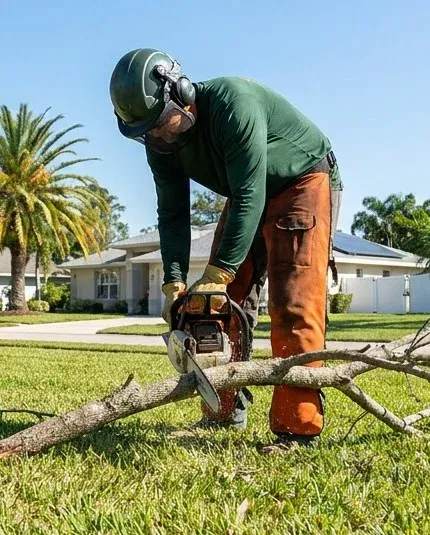
In extremely rare cases, a homeowner might safely remove a tree. This would be a very small sapling (think wrist-thick), located far away from any structures, power lines, or valuable landscaping, on perfectly flat, clear ground, with no lean or signs of disease. Even then, proper safety gear and basic cutting knowledge are essential. Any tree larger than this, or with any complicating factors, immediately moves into the realm of professional service. When in doubt, always call a professional. Your safety and property are not worth the risk.
Walker Tree Service: Your Expert Partner for Safe & Affordable Tree Removals
At Walker Tree Service, we believe that peace of mind is priceless. When you choose us for your tree removal needs, you're not just hiring a crew with chainsaws; you're investing in safety, expertise, and efficiency. We specialize in both small and large tree removals, tackling every job with the same meticulous planning and professional execution, ensuring your property remains pristine and you remain safe.
Why Choose Walker Tree Service for Any Size Tree Removal?
Safety First, Always
Our top priority is the safety of our team, your family, and your property. Our employees are highly trained and equipped with the latest safety gear and techniques. We adhere to the strictest industry standards and carry comprehensive insurance, protecting you from any liability. We meticulously plan each cut, using advanced rigging and felling techniques to control the fall direction and minimize risk, even in the tightest spaces. Don't risk a trip to the emergency room or a hefty repair bill; let the experts handle it.
Fast, Efficient, and Clean Service
We understand that a problematic tree can be a source of stress. Our team works quickly and efficiently to remove trees, often completing jobs faster than you might expect. Once the tree is down, our work isn't over. We cut logs into manageable pieces and haul away all debris, leaving your yard cleaner than we found it. You won't have to lift a finger or worry about logistics; we handle everything from start to finish.
Affordable Solutions for Every Budget
Many homeowners assume professional tree removal is prohibitively expensive, especially for smaller trees. However, when you factor in the cost of renting specialized equipment, purchasing safety gear, potential property damage, and even medical bills from DIY attempts, professional service often proves to be the more economical choice in the long run. We offer competitive pricing and provide fast, free, no-obligation estimates. We believe in transparent pricing, so you'll know exactly what to expect without any hidden fees.
Expertise You Can Trust
Our team comprises experienced employees who possess in-depth knowledge of tree biology, structural mechanics, and safe removal practices. We can assess your tree's health, identify potential hazards, and recommend the best course of action. Whether it's a strategically cut limb to direct a fall, or a complex sectional removal using ropes and harnesses, our expertise ensures a smooth and safe process every time. For more information about our comprehensive tree removal and other related services, please visit our comprehensive tree services page.
Comprehensive Services Beyond Just Removal
While this article focuses on tree removal, Walker Tree Service offers a full spectrum of tree care solutions, including:
- Stump Grinding: We don't just remove the tree; we can eliminate the unsightly stump, allowing you to reclaim your yard space.
- Tree Trimming & Pruning: Expert shaping and maintenance to enhance tree health and aesthetics, preventing future removal needs.
- Emergency Tree Services: When storms hit, we're here for rapid response to clear fallen trees and mitigate immediate dangers.
Don't let a "small" tree become a big problem. The potential risks of DIY tree removal far outweigh any perceived savings. Save your back, protect your property, and ensure the safety of everyone around you by trusting the professionals at Walker Tree Service. We're committed to providing top-quality, affordable, and safe tree removal solutions for homeowners throughout the community.
Save your back and protect your property—call Walker Tree Service at (727) 902-5825 for a fast, free estimate on any size tree removal. We're ready to help you maintain a beautiful, safe, and clear property.