How to Safely Execute a Large Tree Removal in Tight Pinellas County Suburbs
In the vibrant, densely populated communities of Pinellas County, our homes are often nestled amongst mature, majestic trees. These towering natural beauties provide shade, character, and a touch of Florida's wild charm. However, what happens when one of these giants, perhaps a massive oak or a towering pine, begins to show signs of decay, leans precariously, or simply outgrows its space, posing an imminent threat to your home, power lines, or neighboring properties? The thought alone can be daunting. Removing such a colossal, compromised tree, especially when it's located dangerously close to structures and essential utilities, isn't just a chore-it's a high-stakes operation. This isn't a job for amateurs; it requires precision, expertise, and an unwavering commitment to safety. For homeowners in Pinellas County, understanding the intricacies of safe, large tree removal in tight suburban spaces is crucial, and knowing when to call the professionals can make all the difference.
The Stress of a Massive, Decaying Tree Leaning Over Your Roof
Imagine this: you're enjoying a peaceful evening in your Pinellas County home, but every gust of wind, every distant rumble of thunder, sends a shiver down your spine. Why? Because directly over your roof, perhaps even touching it, looms a massive tree. It's been there for decades, a silent sentinel, but lately, you've noticed things. A dead limb here, a patch of fungus there, perhaps a subtle lean that seems more pronounced after the last storm. This isn't just an aesthetic concern; it's a profound source of stress, a constant, nagging worry that can disrupt your peace of mind and even your sleep.
The psychological burden of owning a compromised, towering tree is immense. Homeowners often report feeling a persistent sense of dread, especially during Florida's intense storm seasons. Hurricanes, tropical storms, and even severe thunderstorms can unleash incredible forces, and a weakened tree, particularly one of significant size, becomes a catastrophic liability. You find yourself constantly checking the weather forecast, scanning the tree for new cracks or signs of instability, and envisioning worst-case scenarios: a limb crashing through your living room, the entire trunk toppling onto your bedroom, or roots compromising your home's foundation or underground utilities.
Beyond the emotional toll, the tangible risks are very real. A falling tree or a major limb can cause:
- Extensive Property Damage: Roofs, walls, windows, fences, vehicles, and even neighboring homes are all vulnerable. The cost of repairs can quickly skyrocket into tens of thousands of dollars.
- Personal Injury or Fatality: The most severe risk, of course, is to human life. Being inside a home when a large tree falls, or being outdoors nearby, can lead to severe injuries or even death.
- Utility Disruptions: Power lines, telephone cables, and internet connections are frequently damaged by falling trees, leading to widespread outages and potential electrical hazards.
- Insurance Headaches: While homeowner's insurance typically covers tree damage, the process of filing claims, coordinating repairs, and dealing with deductibles adds another layer of stress to an already difficult situation.
In Pinellas County, where properties are often compact and trees are mature, these risks are amplified. A tree that might pose a minor inconvenience in a rural setting becomes a major hazard in a dense suburban environment. Recognizing the signs of a failing tree-significant deadwood, deep cracks in the trunk, visible decay or fungus, a sudden lean, or heaving soil around the base-is the first step. The second, and most critical, is to understand that for these massive, decaying trees, it's often not a question of "if" they will fall, but "when." Proactive removal is not just a recommendation; it's a necessary safeguard for your property and the safety of your loved ones.
The Step-by-Step Physics and Rigging Techniques Professionals Use for Tight-Space Large Tree Removals
Removing a large tree, especially one situated in the confined spaces typical of Pinellas County suburbs, is a highly complex operation that demands specialized knowledge, advanced equipment, and meticulous planning. It's a delicate dance between raw power and precise control, where a single misstep can have dire consequences. Professional tree removal experts don't just "cut down" a tree; they systematically dismantle it using a combination of physics, engineering, and rigging techniques honed over years of experience.
Initial Assessment and Strategic Planning
Every large tree removal begins with a thorough site assessment. Our employees at Walker Tree Service meticulously evaluate:
- Tree Health and Structure: Identifying decay, weak points, and the tree's overall stability.
- Surrounding Obstacles: Mapping out homes, fences, power lines, septic systems, landscaping, and other potential hazards.
- Access and Egress: Determining the best routes for equipment, crew, and debris removal.
- Environmental Factors: Considering wind direction, sunlight, and soil conditions.
This assessment informs a detailed removal plan, which includes calculating the tree's weight, understanding its center of gravity, and designing a strategy to control every piece as it comes down.
Advanced Climbing and Aerial Access
For trees in tight spaces where traditional felling isn't an option, our expert climbers ascend the tree, often using ropes and harnesses, or utilize specialized aerial lifts to reach the uppermost sections. This allows for a top-down approach, ensuring that each cut is made with precision and control. Safety is paramount, with climbers using personal protective equipment (PPE) and adhering to strict industry standards.
The Art and Science of Rigging
Rigging is the heart of safe, tight-space tree removal. It involves using a sophisticated system of ropes, pulleys, blocks, and friction devices to control the descent of cut limbs and trunk sections. Here's how it works:
- Anchor Points: Strong, stable points (often other sturdy parts of the tree or ground anchors) are established to secure ropes.
- Lowering Devices: Tools like the Port-A-Wrap or various friction brakes are used to create controlled resistance, allowing ground crew to slowly and safely lower heavy sections.
- Pulleys and Blocks: These mechanical advantages are strategically placed to redirect ropes and multiply lifting or lowering forces, enabling the safe handling of incredibly heavy loads.
- Cutting Techniques: Climbers make precise cuts, often using chainsaws, to section off limbs and trunk pieces. These cuts are designed to direct the weight and fall direction of each piece.
- Directional Control: "Tag lines" or "pull lines" are often attached to sections being cut, allowing ground crew to pull or guide the falling piece away from obstacles as it's lowered.
Every cut piece, whether a small branch or a large trunk section weighing hundreds or even thousands of pounds, is carefully rigged, cut, and then slowly lowered to a designated drop zone on the ground. This methodical approach ensures that no piece falls uncontrollably, preventing damage to your property or surrounding infrastructure.
Crane-Assisted Removal: When Precision Meets Power
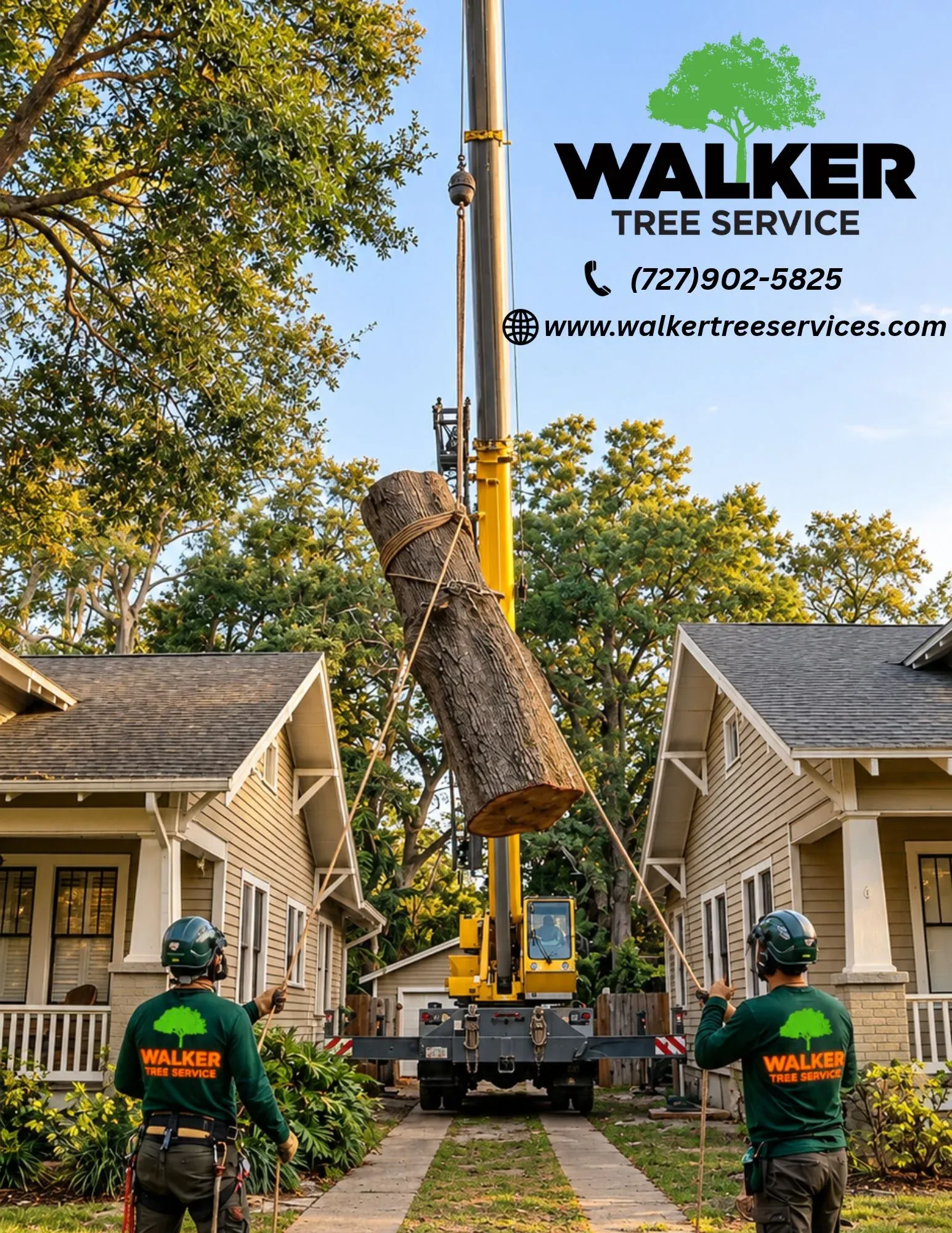
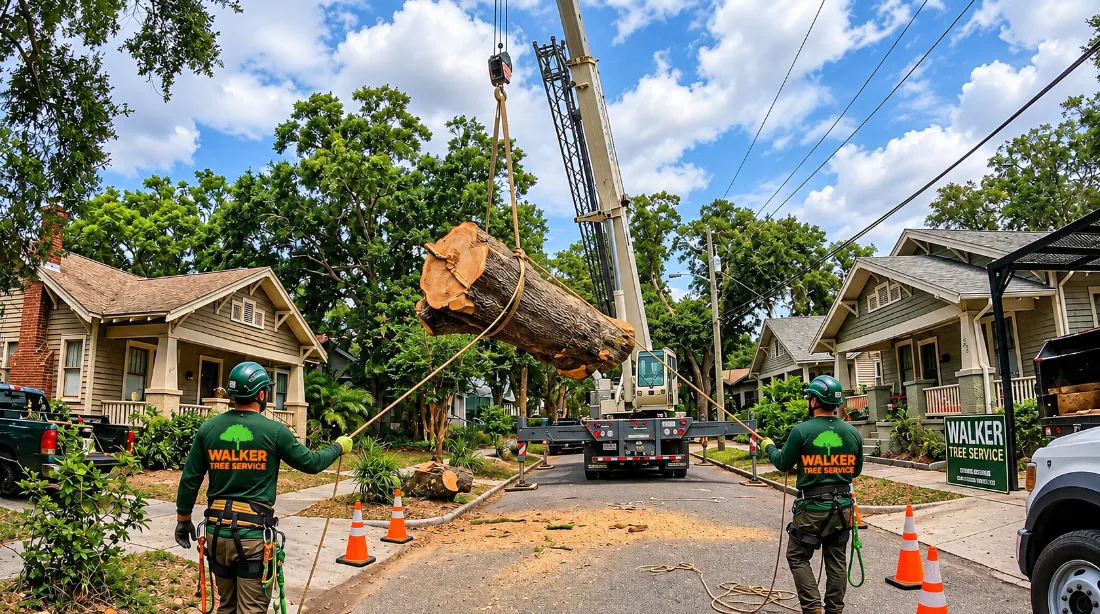
For exceptionally large trees, or those in extremely challenging locations, crane-assisted removal is often the safest and most efficient method. A crane can lift entire sections of the tree, sometimes even the entire trunk, directly over your home and other obstacles, placing them safely in an open area for processing. This technique minimizes the time a climber spends in the tree and significantly reduces the risk of impact damage to your property. It requires highly skilled crane operators and ground crews who work in perfect synchronicity, often communicating via headsets for precise coordination.
The physics involved in calculating load weights, boom angles, and swing radius are critical. Our teams are trained to perform these complex calculations, ensuring that the crane operates within its safe working limits, making crane-assisted removal a testament to the blend of heavy machinery and intricate planning.
From the initial climb to the final lowering of the last trunk section, professional tree removal is a testament to skill, experience, and an unwavering commitment to safety. It's about leveraging the laws of physics to conquer gravity, turning a potentially dangerous situation into a controlled, successful operation, all while protecting your valuable property.
Why DIY is Never an Option for Large Removals and How Professional Workmanship Prevents Property Damage
The allure of saving money by tackling a large tree removal yourself can be strong, but for massive trees in tight suburban spaces, DIY is not just ill-advised-it's incredibly dangerous and almost guarantees property damage. The risks associated with attempting such a complex task without the proper training, experience, and equipment are simply too high to justify.
The Perils of DIY Tree Removal
Attempting to remove a large tree yourself can lead to a litany of catastrophic outcomes:
- Severe Injury or Fatality: Tree work, especially at height and with heavy loads, is consistently ranked among the most dangerous professions. A moment's lapse, an improper cut, or a rigging failure can lead to falls, electrocution (from hidden power lines), or being struck by falling limbs, resulting in life-altering injuries or death.
- Uncontrolled Falling Hazards: Without a deep understanding of tree physics, weight distribution, and directional felling techniques, a DIY attempt often results in uncontrolled falls. This means the tree or its massive limbs can crash into your roof, garage, fence, car, or even your neighbor's property, causing immense structural damage that far outweighs any perceived cost savings.
- Utility Line Damage: Overhead power lines are often hidden within tree canopies. A DIY mistake can sever these lines, creating live electrical hazards, causing widespread power outages, and incurring substantial fines and repair costs.
- Lack of Proper Equipment: Professional tree removal requires specialized tools-high-powered chainsaws, rigging ropes, climbing gear, aerial lifts, and sometimes cranes. Homeowners rarely possess this equipment, and attempting to use inadequate tools increases risk exponentially.
- Insurance Liability Nightmares: Most homeowners' insurance policies will not cover damage or injury resulting from DIY tree removal if it's deemed to have been performed negligently or without proper safety precautions. This leaves you personally liable for all damages, medical bills, and potential lawsuits.
The Unmatched Value of Professional Workmanship
Choosing a professional tree service like Walker Tree Service isn't just about hiring someone to cut down a tree; it's an investment in safety, precision, and peace of mind. Our professional workmanship offers unparalleled benefits that directly prevent property damage:
- Expertise and Experience: Our team members are highly trained tree technicians who understand tree biology, structural integrity, and the intricate physics of removal. They can accurately assess risks and execute complex rigging plans.
- Specialized Equipment: We come equipped with state-of-the-art tools and machinery designed specifically for safe and efficient large tree removal. This includes everything from advanced climbing gear and rigging systems and, when necessary, cranes.
- Comprehensive Insurance and Licensing: Walker Tree Service is fully licensed and insured, including liability insurance and workers' compensation. This means that if an unforeseen accident were to occur (though our safety record is impeccable), you, the homeowner, are fully protected from financial responsibility.
- Efficient and Clean Execution: Professionals not only remove the tree safely but also efficiently clean up the site, removing debris and leaving your property tidy. This minimizes disruption to your daily life.
- Permitting Knowledge: In some areas of Pinellas County, permits may be required for large tree removal, especially for certain species or within specific zones. Professionals are familiar with local regulations and can guide you through the permitting process.
When you entrust a large, precarious tree removal to Walker Tree Service, you're not just avoiding the dangers of DIY; you're ensuring that the job is done right, protecting your most valuable asset-your home-and giving you the peace of mind you deserve. Don't gamble with your safety or your property. For critical situations like an emergency tree removal, the choice of a professional becomes even more vital.
Don't let a precarious tree threaten your peace of mind or property in Pinellas County. When it comes to the safe, precise, and expert removal of large trees in tight suburban spaces, Walker Tree Service is the name you can trust. Our experienced team is ready to assess your situation and provide a solution that prioritizes safety and protects your home. Keep your home safe from falling hazards-call the heavy removal experts at Walker Tree Service today at (727)902-5825.