Picture this: you're driving through the beautiful, sun-drenched streets of Pinellas County, Florida, admiring the vibrant landscapes and the iconic palm trees that define our coastal paradise. But then, your eye catches a property where the palms look... different. Instead of elegant, swaying fronds, you see a shaggy, overgrown canopy, dead fronds hanging precariously, and perhaps even a "skirt" of old growth clinging to the trunk. It's a common sight, unfortunately, and one that homeowners and commercial property managers often overlook until it becomes a significant problem. Unmanaged, overgrown palm trees aren't just an eyesore; they pose real risks to property, people, and the health of the tree itself. If your Pinellas County property is home to palms that have seen better days, it's time to consider the impact of neglected palm tree care and discover how professional services can transform your landscape.
Overgrown Palm Trees in Pinellas County FL: A Growing Concern
In a region as rich in natural beauty as Pinellas County, our palm trees are more than just part of the scenery; they're an integral part of our lifestyle and property values. Yet, it's surprisingly easy for these majestic plants to fall into disrepair. Life gets busy, and tree maintenance can often slip down the priority list. However, ignoring the needs of your palm trees can lead to a host of issues, from aesthetic blight to serious safety hazards.
The Visual Impact of Neglect
When palm trees are left untrimmed, they begin to accumulate dead or dying fronds. These fronds turn brown, droop, and often create what's colloquially known as a "palm skirt" around the trunk. While some species naturally retain old fronds, many common varieties in Pinellas County, like the Queen Palm or Washingtonia Palm, benefit greatly from regular removal of dead growth. An unkempt palm tree detracts significantly from your property's overall appearance. It can make a well-maintained home look less appealing and send the wrong message about a commercial establishment. For businesses, curb appeal is directly linked to customer perception and foot traffic. For homeowners, it can impact neighborhood aesthetics and even property resale value. A beautiful home or business deserves to be framed by equally beautiful, well-cared-for landscaping, and that includes your palms.
Hidden Dangers Lurking Above
Beyond aesthetics, unmanaged palm trees present tangible dangers. Dead or dying fronds are not just unsightly; they are heavy and can fall unexpectedly, especially during strong winds or storms — a frequent occurrence in Florida. A falling frond can cause significant property damage, denting cars, breaking fences, or even damaging roofs. More critically, they pose a serious threat to anyone standing underneath. Imagine a heavy, dried palm frond falling on a child playing in the yard, a customer entering your business, or a pedestrian walking by. The risk of injury is substantial.
The dense, decaying material of neglected palm skirts creates ideal habitats for rodents, snakes, insects, and even scorpions — bringing them uncomfortably close to your property and increasing the risk of infestations or bites.
Why Pinellas County Palms Need Attention
Pinellas County's climate, while perfect for palm growth, also contributes to the rapid cycle of frond death and growth. The intense sun, humidity, and occasional severe weather mean that palms grow quickly and shed old fronds regularly. This natural process necessitates consistent professional care to keep them healthy and safe. Without it, the problems compound. Moreover, certain diseases and nutrient deficiencies can manifest in the fronds, and an untrained eye might miss these crucial indicators. Professionals, like those at Walker Tree Service, are trained to identify these issues early, preventing more severe problems down the line. Keeping up with palm tree maintenance isn't just about trimming; it's about understanding the unique needs of these tropical beauties in our specific environment.
The Beauty and Benefits of Well-Manicured Palm Trees
Once you understand the problems associated with neglect, the advantages of proactive palm tree care become crystal clear. A well-manicured palm tree is a testament to thoughtful property management, offering a myriad of benefits that extend far beyond simple aesthetics. It's an investment in your property's value, safety, and overall health.
Boosted Curb Appeal
Elegantly trimmed palms elevate any landscape, signaling pride of ownership and attention to detail — and adding to property value.
Enhanced Safety
Removing dead or diseased fronds eliminates the risk of them falling and causing injury or property damage.
Long-Term Tree Health
Proper trimming lets the tree direct energy into healthy growth, improves air circulation, and helps prevent fungal disease.
Long-Term Health for Your Palms
Proper trimming is not just about looks and safety; it's vital for the long-term health and vitality of your palm trees. Removing dead fronds allows the tree to direct its energy towards healthy growth, rather than expending resources on decaying material. It also improves air circulation within the canopy, which can help prevent fungal diseases that thrive in damp, stagnant conditions. Walker Tree Service can identify early signs of disease or pest issues during a routine trimming, allowing for timely intervention before the problem escalates. This proactive approach ensures your palms remain strong, resilient, and beautiful for years to come, protecting your landscape investment. For more information on general tree health and care, you can often find valuable resources from organizations like the International Society of Arboriculture.
Proper Palm Tree Trimming Techniques: What You Need to Know
Trimming a palm tree might seem straightforward, but it's a specialized skill that requires knowledge, the right tools, and an understanding of palm biology. Incorrect trimming can cause irreparable damage to the tree, weaken its structure, and even shorten its lifespan. This is why professional expertise is not just recommended, but often essential.
Understanding the "Green Frond" Rule
One of the most crucial principles in palm tree trimming is the "green frond" rule. This rule dictates that only dead, dying, or severely damaged fronds should be removed. Healthy green fronds, even those that appear to be drooping slightly, are vital for the palm's health. They are the tree's food producers, generating the energy through photosynthesis that the palm needs to grow and thrive.
A well-trimmed palm should have a full, rounded canopy of healthy green fronds, with only the brown, withered ones removed.
— Walker Tree ServiceRemoving too many green fronds, often called "over-pruning" or "hurricane cutting," severely stresses the tree. It can stunt growth, make the palm more susceptible to diseases and pests, and weaken its overall structure, ironically making it more vulnerable to wind damage rather than less. This practice ensures the tree maintains its aesthetic appeal while preserving its vital photosynthetic capacity.
Essential Tools and Safety Precautions
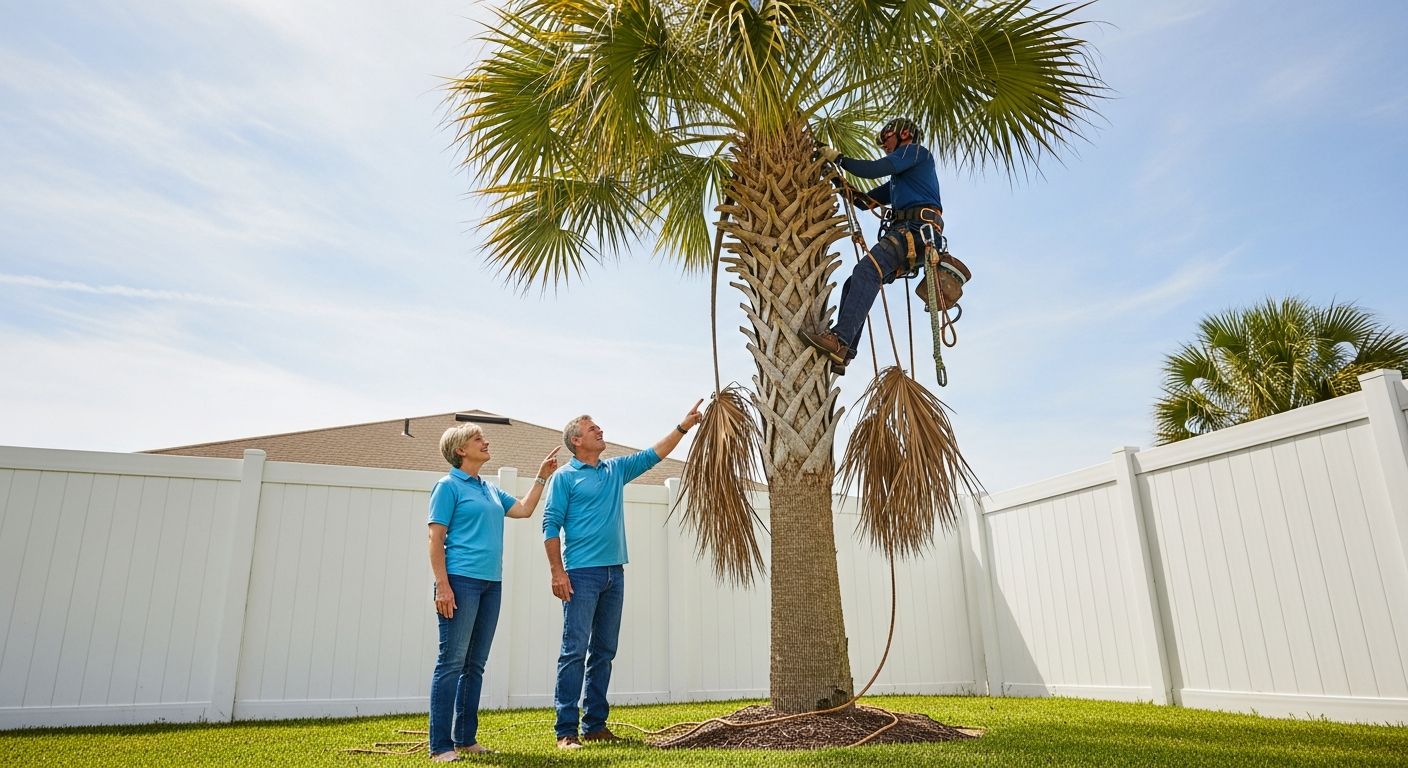
Palm tree trimming, especially for mature trees, involves working at heights with sharp tools. This presents significant safety risks. Professionals use specialized equipment, including bucket trucks, climbing gear, chainsaws, pole saws, and hand pruners, all designed for safe and efficient operation.
Attempting to trim tall palms yourself without the proper equipment or training can lead to serious accidents — falls, cuts, or electrocution if power lines are nearby. Improper tool usage also damages the tree, leaving open wounds susceptible to disease.
The Importance of Professional Expertise
While DIY might be tempting for small tasks, palm tree care is best left to professionals who understand the specific needs of different palm species common in Pinellas County. They know how to identify signs of disease, nutrient deficiencies, or pest infestations that an untrained eye might miss. They are skilled in executing the "green frond" rule precisely and safely, ensuring the long-term health and structural integrity of your trees. Professionals also carry the necessary insurance, protecting both themselves and your property from any unforeseen incidents during the trimming process. By entrusting your palm tree care to experts, you're not just hiring someone to cut fronds; you're investing in the health, beauty, and safety of your entire property. To explore our comprehensive tree care solutions, please visit our services page.
Don't let overgrown, unmanaged palm trees detract from your Pinellas County property's beauty or compromise its safety. Walker Tree Service is your trusted partner for expert palm tree care, committed to enhancing your landscape with precision, professionalism, and a friendly approach. Our team understands the unique challenges and requirements of palm tree maintenance in our Florida climate. We ensure your palms are not only aesthetically pleasing but also healthy, strong, and safe, contributing positively to your property's value and your peace of mind.
Ready to Transform Your Palms?
Free, no-obligation estimate for palm trimming, removal, and care anywhere in Pinellas County.