That flyer tucked into your mailbox, promising unbelievably low prices for tree removal, might seem like a welcome solution to your overgrown yard. But before you pick up the phone, consider the hidden dangers lurking behind those bargain rates. Hiring an uninsured, amateur tree cutter isn't just a gamble; it's an invitation to extreme financial and legal risks. Imagine a worker falling from a great height on your property, a massive branch crushing your neighbor's fence, or an inexperienced crew severing a power line. Who pays for the medical bills? Who covers the property damage? The answer, shockingly often, could be you — leading to a nightmare of lawsuits, astronomical repair costs, and a significant hit to your homeowner's insurance. At Walker Tree Service, we believe in protecting our clients, their property, and our dedicated team, which is why understanding the importance of proper licensing and workers' compensation is absolutely critical.
The Tempting Lure of Cheap Tree Removal: A Hidden Nightmare for Your Homeowner's Insurance
The Appeal of the "Bargain" Tree Service
We all appreciate a good deal, especially when it comes to necessary home maintenance. Tree removal, often a significant investment, can make those "too good to be true" offers incredibly appealing. You might spot flyers stapled to utility poles, ads on social media, or hear about a "guy with a chainsaw" who claims he can do the job for a fraction of the cost of established companies. These individuals or fly-by-night operations frequently operate without the necessary business licenses, proper insurance, or trained crews. They promise quick work and low prices, often preying on homeowners who are simply looking to save a few dollars.
Beyond the quality of the cut, the real problem lies in the massive, often unforeseen, liabilities you assume the moment an uninsured worker steps onto your property. When you hire an unlicensed and uninsured individual or company, you essentially become their employer in the eyes of the law, especially if an accident occurs. This legal distinction can have devastating consequences, transforming a simple tree removal project into a complex and costly legal battle that impacts your personal finances and homeowner's insurance policy.
When the Unthinkable Happens: A Lawsuit Waiting to Strike
Consider this scenario: An amateur tree cutter, lacking proper safety equipment and training, is attempting to fell a large oak in your backyard. They misjudge the cut, and the tree falls the wrong way, damaging your roof, a neighbor's car, or, even worse, severing a utility line. Who is financially responsible for these damages? If the contractor isn't insured, the burden falls directly on you, the homeowner. Your homeowner's insurance policy, while a crucial safeguard, might not cover damages caused by an uninsured contractor, or it might only cover a portion, leaving you to pay the rest out of pocket. Many policies have specific exclusions for work performed by uninsured third parties, especially if you knowingly hired them.
If a worker for an uninsured tree service is injured on your property, they can sue you directly for medical expenses, lost wages, and pain and suffering — lawsuits that can run into hundreds of thousands, even millions, of dollars.
Even more devastating is the risk of personal injury. Tree work is inherently dangerous. Professionals use specialized equipment, adhere to strict safety protocols, and are extensively trained to mitigate risks. An amateur, however, might sustain a serious injury — a fall from a ladder, a chainsaw accident, or being struck by a falling limb. Without workers' compensation insurance (which we'll discuss in detail next), the injured individual can sue you directly for medical expenses, lost wages, and pain and suffering. These lawsuits can run into hundreds of thousands, even millions, of dollars, easily bankrupting a homeowner and leaving a lasting financial scar.
Many homeowners mistakenly believe their personal liability coverage within their homeowner's policy will cover these incidents. While it might offer some protection, it often has limits and exclusions, especially when it comes to injuries sustained by workers on your property. The legal fees alone, even if you successfully defend yourself, can be crippling. The initial savings from hiring a cheap service quickly evaporate, replaced by a financial and emotional nightmare that can last for years. This is why understanding the full scope of what "fully licensed and insured" truly means is not just a recommendation; it's a necessity for your peace of mind and financial security.
What "Fully Licensed and Insured" Really Means: Your Non-Negotiable Protection for Dangerous Tree Removals
Beyond a Simple Statement: The Layers of Protection
When a reputable tree service like Walker Tree Service states they are "fully licensed and insured," it's more than a slogan; it's a promise of comprehensive protection. This encompasses critical components designed to mitigate the inherent risks associated with tree care and removal, especially for large, complex jobs. Each layer of protection is vital for safeguarding you, your property, and the crew performing the work.
Business Licensing
Issued by state authorities and local jurisdictions. Indicates we meet operational standards, comply with local regulations, and are recognized as a formal, accountable business.
General Liability Insurance
Protects you from financial responsibility if our work causes damage to your property or a neighbor's — falling limbs, broken windows, accidental damage to underground utilities.
Commercial Vehicle Insurance
Covers our trucks, chippers, stump grinders, and other heavy equipment, protecting you from liability if anything happens while we're parked on or driving to your property.
The Absolute Necessity of Workers' Compensation Insurance
While general liability insurance is crucial, workers' compensation insurance is arguably the most vital, yet often overlooked, component when hiring a tree service. This is especially true for an industry as high-risk as tree removal. Workers' comp is designed to provide medical benefits and wage replacement for employees who are injured on the job. Without it, if a worker is hurt on your property, they can file a claim against you directly, potentially leading to a personal injury lawsuit.
Think about the inherent dangers: working at heights, operating heavy machinery, handling chainsaws, and dealing with unpredictable natural elements. Accidents, despite the best precautions, can happen. If a worker for an uninsured tree service falls from a tree, is struck by a branch, or suffers a severe cut, their medical bills, rehabilitation costs, and lost income could become your responsibility. These costs can be astronomical and are typically far beyond what a standard homeowner's liability policy would cover, potentially leading to devastating personal financial loss.
In Florida, businesses with four or more employees (or one or more in the construction industry, which includes tree removal) are generally required to carry workers' compensation. Always ask for proof — and don't just take their word for it. Request a certificate of insurance directly from their insurance provider, naming you as a certificate holder.
At Walker Tree Service, we are proud to maintain comprehensive general liability and workers' compensation insurance policies. This commitment reflects our dedication to the safety and well-being of our entire team and provides our clients with unparalleled peace of mind. When you choose us, you're choosing a company that values responsibility and protection above all else, ensuring that your tree care needs are met without exposing you to unnecessary risks.
Professional Tree Removal in Pinellas County: Safety, Precision, and Expert Workmanship in Action
Navigating Complex Tree Removals with Expertise
Beyond the essential paperwork of licensing and insurance, the true value of a professional tree service shines through in their workmanship. Tree removal, especially for large or strategically located trees, is a complex operation that demands meticulous planning, specialized equipment, and highly skilled professionals. In densely populated areas like Pinellas County, where properties can be close together and mature trees often intertwine with power lines, precision and safety are paramount.
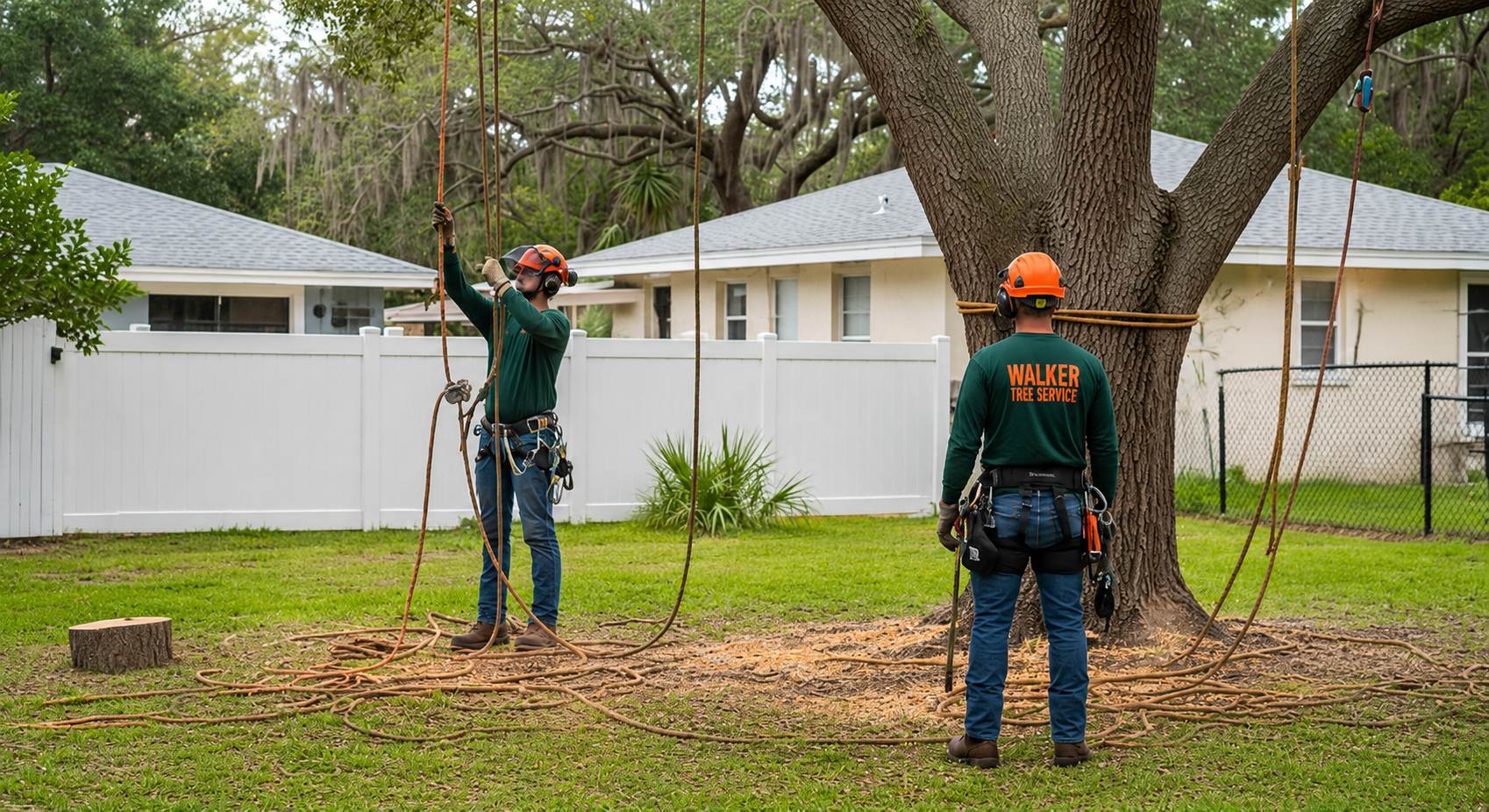
Imagine a massive oak tree looming over your home, its branches reaching towards power lines, or a dying palm precariously close to your pool enclosure. An experienced crew does not simply start cutting. They assess the tree, the property, nearby structures, power lines, fences, pool cages, vehicles, and tight property lines before making a plan.
This is where professional workmanship matters. Large limbs often need to be lowered carefully with ropes instead of dropped. Sections of trunk may need to be removed in a controlled sequence. Crew members need to communicate clearly, use the right equipment, and keep the work area safe from start to finish.
In Pinellas County, this level of care is especially important. Many homes are close together, and mature trees often grow near roofs, driveways, pools, fences, and neighboring properties. One careless cut can create thousands of dollars in damage.
Why Professional Tree Service Is Worth It
The difference between a cheap tree cutter and a professional tree service is not just the price. It is the protection, planning, and accountability behind the work.
That peace of mind matters. When you hire someone without the right coverage, you may be taking on risks you never intended to accept.
— Walker Tree ServiceA professional tree service brings:
- Proper insurance
- Workers' compensation coverage
- Trained crews
- Safety equipment
- Commercial vehicles and equipment
- A plan for protecting your property
- A clear process if something unexpected happens
Before Hiring a Tree Service, Ask These Questions
Before any tree work begins, ask:
- Do you carry general liability insurance?
- Do you carry workers' compensation insurance?
- Can you provide proof of coverage?
- Who will be doing the work?
- How will you protect my home and property?
- What happens if something goes wrong?
If the answers are vague, or if someone says not to worry about it, that is a red flag. A reputable tree service should be able to answer those questions clearly.
The Real Cost of Cheap Tree Work
Cheap tree work may save money upfront, but it can cost much more if something goes wrong. The real cost may include:
Property damage · injury claims · insurance disputes · legal fees · poor workmanship · unfinished cleanup · stress that could have been avoided.
When a job involves large trees, tight spaces, homes, power lines, or commercial property, the safest choice is to hire a professional company that is properly licensed, insured, and prepared.
Call Walker Tree Service
If you need tree removal, tree trimming, storm cleanup, or help evaluating a hazardous tree, call Walker Tree Service.
We serve homeowners, commercial property owners, HOAs, and property managers throughout Pinellas County with safe, professional tree service.
Call Walker Tree Service today at (727) 902-5825 or visit our contact page.
Hire a Tree Service Without the Risk
Fully licensed and insured — including workers' compensation. Free, no-obligation estimates anywhere in Pinellas County.